

A body and life you love during perimenopause
Without the diet police or bootcamp bullies in your head!
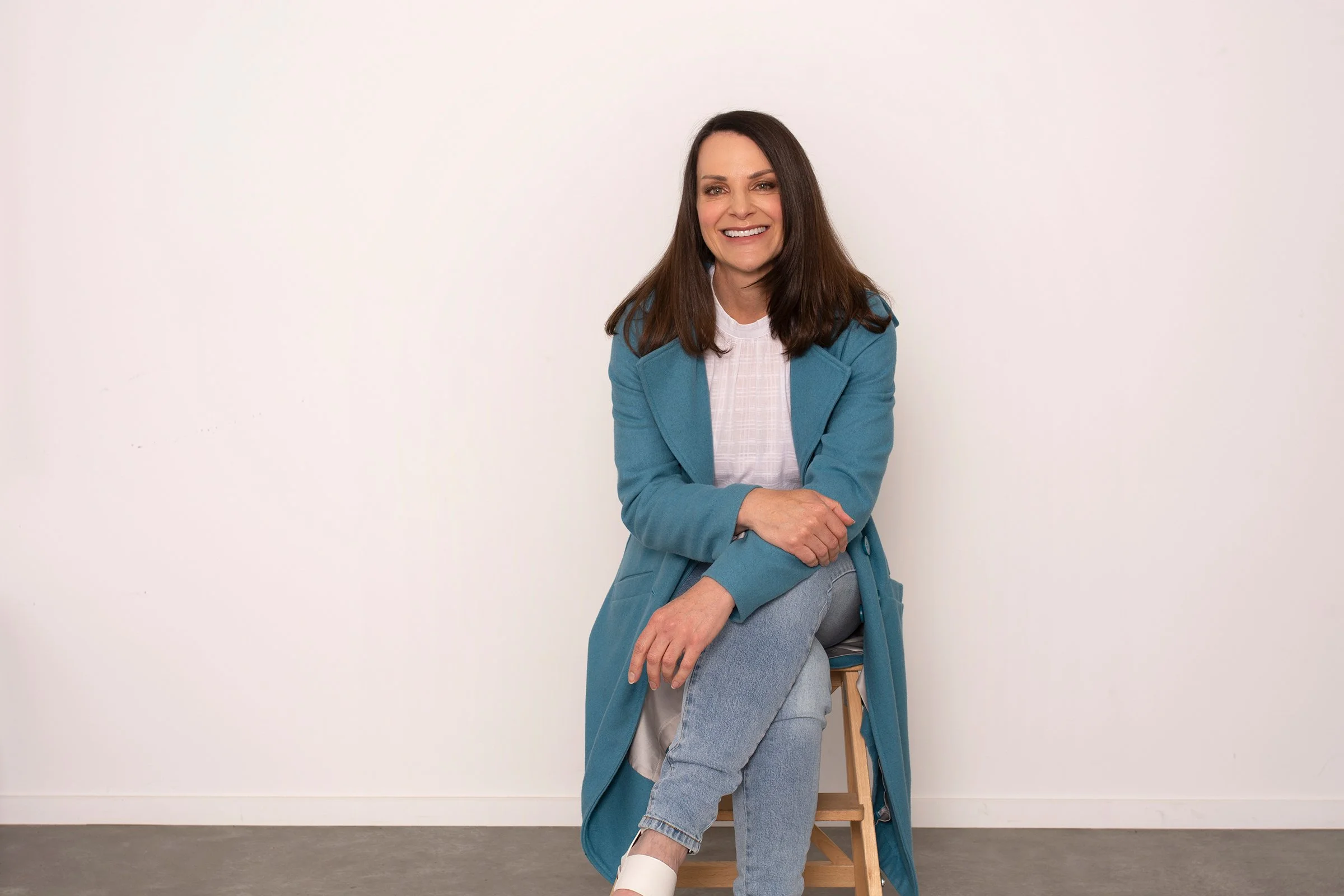
I’m Sarah
I help perimenopausal women rewire the harmful social narratives that pitch them against their own bodies so they can finally achieve their health, fitness & weight goals - without constantly starting over.
Ex-nurse. Certified Coach. Educated in lifestyle medicine, strength & conditioning, nutrition and psychology.

You want to lose weight, have more energy and feel confident in your favourite clothes again…
You’ve read the books, listened to the podcasts, followed the expert advice to a tee - and for a while, it works.
You start getting fitter, stronger, your clothes start to feel better.
But then…
Exhaustion.
Injury.
A frantic work week.
A family drama.
A weekend blowout.
Something always kills your momentum
You drop the habits that support you when. you can’t do them perfectly.
You reach for food and/or alcohol to cope.
You tell yourself you lack willpower, discipline, time or knowledge…
And you give up.
Until a little voice inside urges you to look for that missing puzzle piece.
You start scrolling and searching for the next diet, programme or supplement that’ll finally stick.
And the whole exhausting cycle starts again…
“I always felt like I was missing something. I would beat myself up thinking - why can't I do this?! I'm an intelligent woman and others can do this, so why can't I? I thought I just had bad willpower and was sick of the cyclic behaviour - 'good' during the week and let myself go during the weekends.”
— Chontelle

The problem isn’t YOU
Women have been held to IMPOSSIBLE standards for far too long.
Studies consistently show that women experience significantly higher emotional distress and body dissatisfaction than men when exposed to idealised bodies on social media (Bonfanti et al., 2025; Napp, 2026; Shin et al., 2026; Tennfjord et al., 2025).
To your brain, gaining weight is interpreted as a ‘threat’ which makes losing the weight feel urgent and important for your survival.
That level of pressure and chronic background stress works directly against your goals.
You’re more likely to:
Crave high fat high sugar foods
Use food and/or alcohol to soothe your distress
Over-train and over-restrict your food in an effort to feel better, faster (which ultimately backfires)
Spend your precious time and energy consuming even more expert advice - rather than sticking with the basics long enough to see results.
You have no capacity to be consistent…
Even when women work full-time - or out-earn their male partners - they still carry the vast majority of the physical housework, hands-on caregiving, and invisible mental load of running a household (Milkie et al., 2025; Pew Research Center, 2026; Weeks & Ruppanner, 2025).
Women are taught to be agreeable, available, and attuned to everyone’s needs except their own…
They’re still paid less than men for comparable work (Payscale, 2026; Pew Research Center, 2025), penalised as less "likeable" when assertive (Eagly & Karau, 2002; Williams & Tiedens, 2016), and expected to look twenty years younger and effortlessly lean while carrying all of it without complaining or asking for help.
Meno-rage might just be the most appropriate response to a society that expects you to fawn and perform for your worth!
The good news is, none of this is fixed in stone - these are learned responses that can be UNLEARNED.
With cognitive-behavioural coaching you can recognise your social conditioning for what it is and realign with your authentic values, needs, goals and limits.
You can learn how to set healthy boundaries - without feeling guilty or selfish - which frees up capacity to make steady progress toward your goals.
You can learn to love the process of building habits that genuinely support your health, fitness, weight and wellbeing goals instead of fixating on arriving at a destination you never consciously chose.
Work with me
Introducing:
Stop Starting Over
A 3-month 1:1 coaching partnership to help you finally achieve your health, fitness, weight and wellbeing goals during perimenopause - on your own terms.
“I feel like Sarah has simplified what seemed really complicated to me previously. And that has taken a weight (literally!) off my shoulders.”
— Chontelle
REFERENCES
Bonfanti, R. C., Lo Coco, G., Salerno, L., & Di Blasi, M. (2025). The association between social comparison in social media, body image concerns and eating disorder symptoms: A systematic review and meta-analysis. Body Image, 52, Article 101841. https://doi.org/10.1016/j.bodyim.2024.101841
Eagly, A. H., & Karau, S. J. (2002). Role congruity theory of prejudice toward female leaders. Psychological Review, 109(3), 573–598. https://doi.org/10.1037/0033-295X.109.3.573
Journal of Business and Psychology. (2025). Taking on the invisible third shift: The unequal division of cognitive labor and its impact on work outcomes. Journal of Business and Psychology. https://pmc.ncbi.nlm.nih.gov/articles/PMC12058002/
Milkie, M. A., Sayer, L. C., Nomaguchi, K., & Yan, H. X. (2025). Who's doing the housework and childcare in America now? Differential convergence in twenty-first-century gender gaps in home tasks. Socius, 11. https://doi.org/10.1177/23780231251314667
Napp, C. (2026). Gender differences in body dissatisfaction: A large-scale investigation among adolescents using two international surveys. PLOS ONE, 21(3), Article e0330766. https://doi.org/10.1371/journal.pone.0330766
Payscale. (2026). 2026 state of the gender pay gap report. Payscale, Inc.
Pew Research Center. (2025). Gender pay gap in U.S. hasn't changed much in two decades. Pew Research Center.
Pew Research Center. (2026). How full-time working parents divide household and caregiving duties. Pew Research Center.
Shin, K., Lee, J., & Park, S. (2026). Gender differences in gaze patterns to Instagram influencer body parts. Frontiers in Psychology, 17, Article 1857912. https://doi.org/10.3389/fpsyg.2026.1857912
Tennfjord, M. K., Bell, A. R., & Eg, R. (2025). How social media influences the self-image and body image among female and male adolescents. PLOS ONE, 20(11), Article e0334657. https://doi.org/10.1371/journal.pone.0334657
Weeks, A. C., & Ruppanner, L. (2025). Take a load off? Not for mothers: Gender, cognitive labor, and the limits of time and money. Socius, 11.
Williams, M. J., & Tiedens, L. Z. (2016). The subtle suspension of backlash: A meta-analysis of penalties for women's implicit and explicit dominance behavior. Psychological Bulletin, 142(2), 165–197. https://doi.org/10.1037/bul000039